What I Saw at the State of Homelessness Summit— and Why I Still Believe
In This Article
Written by Freedom House Ministries Director of Development Steve Schauer
Every time I walk through our doors at Freedom House, I see families.
Real people. Parents love their kids. Children interacting and playing with each other. Moms and dads are trying to navigate the journey to their own home. I see determination. I also see how hard the road is.
The conversations I have are genuine. We talk about the path that led them to these circumstances. At the same time, parents and children share their life stories. They talk about their favorite movies, what is happening at school and dreams for the future. These interactions are emotional, inspiring and fun. Sometimes all in the same moment.
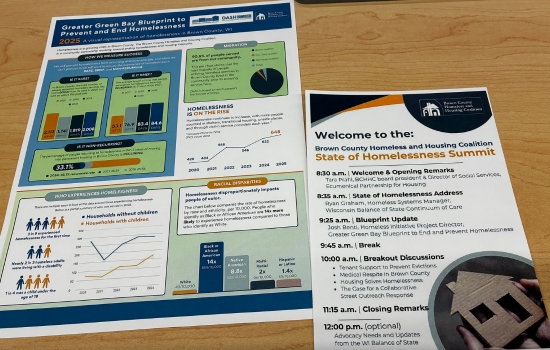
I attended the State of Homelessness Summit recently. It was a gathering of community partners, data analysts, advocates, and people who care about Brown County. I left with a notebook full of numbers, optimism and a touch of frustration. I want to share what I learned because I believe our community deserves to know the truth. The truth can move people to act.
Let me start with something that often surprises people. The overwhelming majority of people experiencing homelessness — almost 73% — are from Brown County. These are our neighbors. They grew up here, went to school here, and raised families here. Homelessness is not something that arrives from somewhere else. It lives in the lives of the people we pass every day at the grocery store or the gas station.
Brown County’s rate of homelessness is 75 people per 10,000 residents. The statewide average is 36. We are experiencing homelessness at more than twice the rate of Wisconsin as a whole. That number kept coming back to me on the drive home.
A significant proportion of the people experiencing homelessness in Brown County are families with children. And within that group, families of color are disproportionately represented. Among households with children, 43% identify as Black or African American, compared to 27% who identify as White. People who identify as Black or African American are 17.5 times more likely than Whites to experience homelessness. These are not data errors. That is a disparity we must be willing to name out loud if we are ever going to address it.
I also want you to understand the economic backdrop families are navigating. In Brown County, to afford a modest two-bedroom apartment, without spending more than 30% of your income on housing, you need to earn $45,880 a year. At the federal minimum wage of $7.25 an hour, you would need to work 122 hours every single week to reach that threshold. There are only 168 hours in a week. And 68% of single-female-headed households with children in our community. They are the very households most often walking through our doors at Freedom House. These families are ALICE: Asset Limited, Income Constrained, Employed. They are working. They are trying. The math just doesn’t work.
That is the hard truth. There is still hope.
The percentage of people returning to homelessness has been declining. In 2019, the rate was 45.5%. Today it is 33.1%. The systems in our community (case managers, coordinated entry processes, housing navigators, emergency shelters) are making a measurable difference. In Brown County, more than 33% of people exiting emergency shelter moved to permanent housing. People are getting housed. They are staying housed.
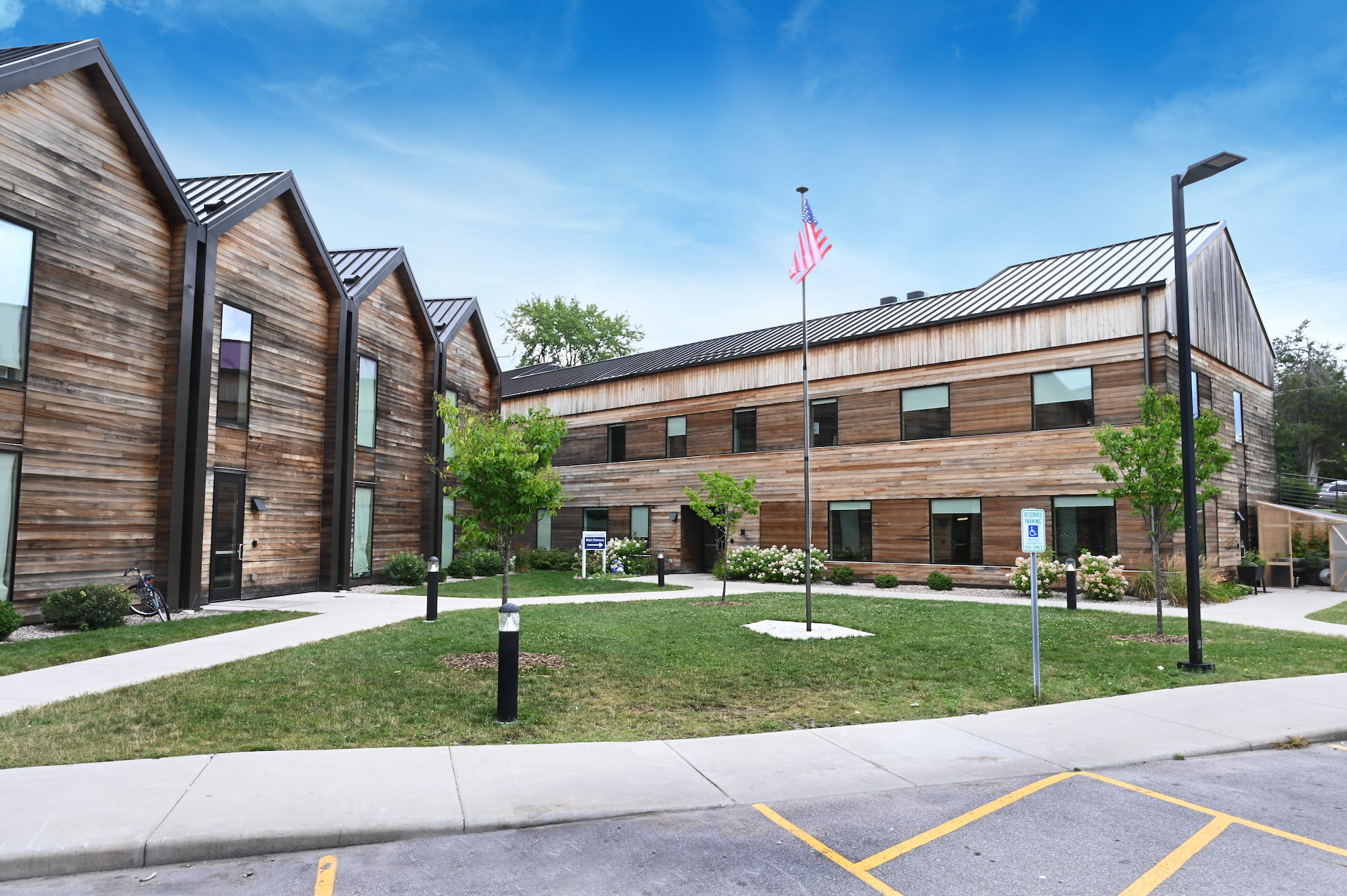
I also want to say something about the families served at 2997 St. Anthony Drive. They shouldn’t get lost in the statistics. The work at Freedom House — the real work — is not done by our staff. Success is achieved by each family. Mothers are navigating housing challenges while getting their children to school and showing up for work. Fathers are rebuilding their work history to ask for a raise. Children are doing their reading assignments while thinking about what the future holds. Freedom House comes alongside them. We help remove barriers, connect resources, and build skills. But families are the ones doing the rebuilding. When families leave Freedom House, they have stronger finances, relationships and confidence than when they arrived. That matters to me more than I can say.
Homelessness does not have to be a long chapter in anyone’s story. The goal that we hold onto at Freedom House is that homelessness is a brief and one-time event. That vision is not naive. It is the standard we are working toward every single day.
And we need you.
If you are a landlord or an employer, consider how your screening criteria might create walls that hard-working families cannot climb. Modifying those standards gives someone a second chance at a lease or a job. It could be the single most transformative thing you do this year.
If you have a voice, use it. Learn about the root causes of homelessness in Brown County. Talk to your friends, family, or co-workers. Speak in favor of workforce housing, shelter services, and the programs that keep families together at a community meeting. The conversation we have in public shapes the decisions our leaders make.
If you have resources, please give. Organizations like Freedom House depend on the generosity of this community. You can fund the safety, warmth, basic needs and resources families need. Your donation does not just keep a light on — it keeps a family together while they find their footing.
And if you have time, volunteer. There is certainly something you do well. It could be cooking, tutoring, writing, repairing, or mentoring. You can help a family in crisis right now.
The numbers are real. The need is real. But so is the progress. And so is this community, when it decides to show up. I have seen it happen. Families walk out of Freedom House with keys in hand, heads held high and a smile on their faces. I want to see it happen a thousand more times.
The work is not finished. Not even close. Together, let’s put more smiles on families’ faces.

Steve Schauer
Director of Development